Radon Mitigation in Crooks, SD
Small town, spread-out edges
Crooks is one of the metro’s quiet corners: a small in-town grid of modest basement homes, most built from the 1970s onward as Sioux Falls workers looked for elbow room, ringed by acreages — something the bigger suburbs don’t have much of. Hobby farms, shelterbelt properties, and newer executive builds on multi-acre lots stretch along the section roads in every direction.
That split, town lots versus acreage, is the useful way to think about radon here. In town, the stock is familiar: ranches and split-foyers on full basements, city utilities, the standard eastern-South-Dakota radon setup on Minnehaha County’s Zone 1 glacial ground. The fix, when a test calls for one, is the standard fix.
The acreages carry two wrinkles worth knowing. First, foundations get more varied outside town (older farmhouses with cellar-depth basements and frost-wall additions, outbuilding conversions, daylight basements cut into rises), and system design follows the foundation, not the mailing address. Second, most acreage homes run on private wells, which opens radon’s second, smaller pathway: gas dissolved in well water that releases indoors when a tap or shower runs. It’s a minority contributor in most homes, but on a strong well source it can keep an air number stubborn after the soil-gas side is fixed.
No dataset will ever be published for a town of Crooks’ size. County grain is as fine as the state’s numbers go, and the regional picture lives at radon levels in your area. Town lot or quarter-section, the answer starts with a test under your own roof.
Work that fits both sides of town
For the in-town grid, it’s the metro standard: radon mitigation designed to the basement, installed with the pipe run worked out at the assessment, and verified by a retest below the action level of 4 picocuries per liter.
For the acreages, the scope can widen. Farmhouse-era foundations sometimes need crawlspace sections brought into the system, and well households occasionally add a radon-in-water evaluation when air numbers and well chemistry suggest the water is contributing. Neither is exotic. They’re just the versions of the work that rural properties call for, assessed case by case rather than assumed.
The honest coverage note: scheduling runs from Sioux Falls, and Crooks is a fifteen-minute drive northwest, with the acreages a few minutes past that. Everything from a first test to a post-install retest books as a normal visit out here. Radon doesn’t distinguish between a 50-foot lot and fifty acres. The soil under both is the same glacial till, and the same short sequence of test, fix if it’s high, and retest to prove it settles the question either way.
Our Services
-
Radon Mitigation
A mitigation system collects the gas beneath the home and vents it safely above the roofline — before it can build up indoors.
Learn more
-
Radon Testing
Radon can't be seen or smelled — a test is the only way to know a home's level.
Learn more
-
Radon for Home Sales
Radon findings in a purchase usually come with a deadline attached — the process works better when someone's done it on a closing schedule before.
Learn more
-
Radon Fan Replacement & System Repair
Mitigation fans run continuously for years — and like anything that runs continuously, they eventually wear out.
Learn more
-
Passive Radon System Activation
Many newer homes were built with a passive radon rough-in — a pipe that's ready for a fan but doesn't have one yet.
Learn more
-
Crawlspace Radon Mitigation
Homes over crawlspaces need a different approach — typically a sealed membrane over the exposed soil, tied into the venting system.
Learn more
Areas We Serve
- Sioux Falls
- Brandon
- Harrisburg
- Tea
- Hartford
- Crooks
- Dell Rapids
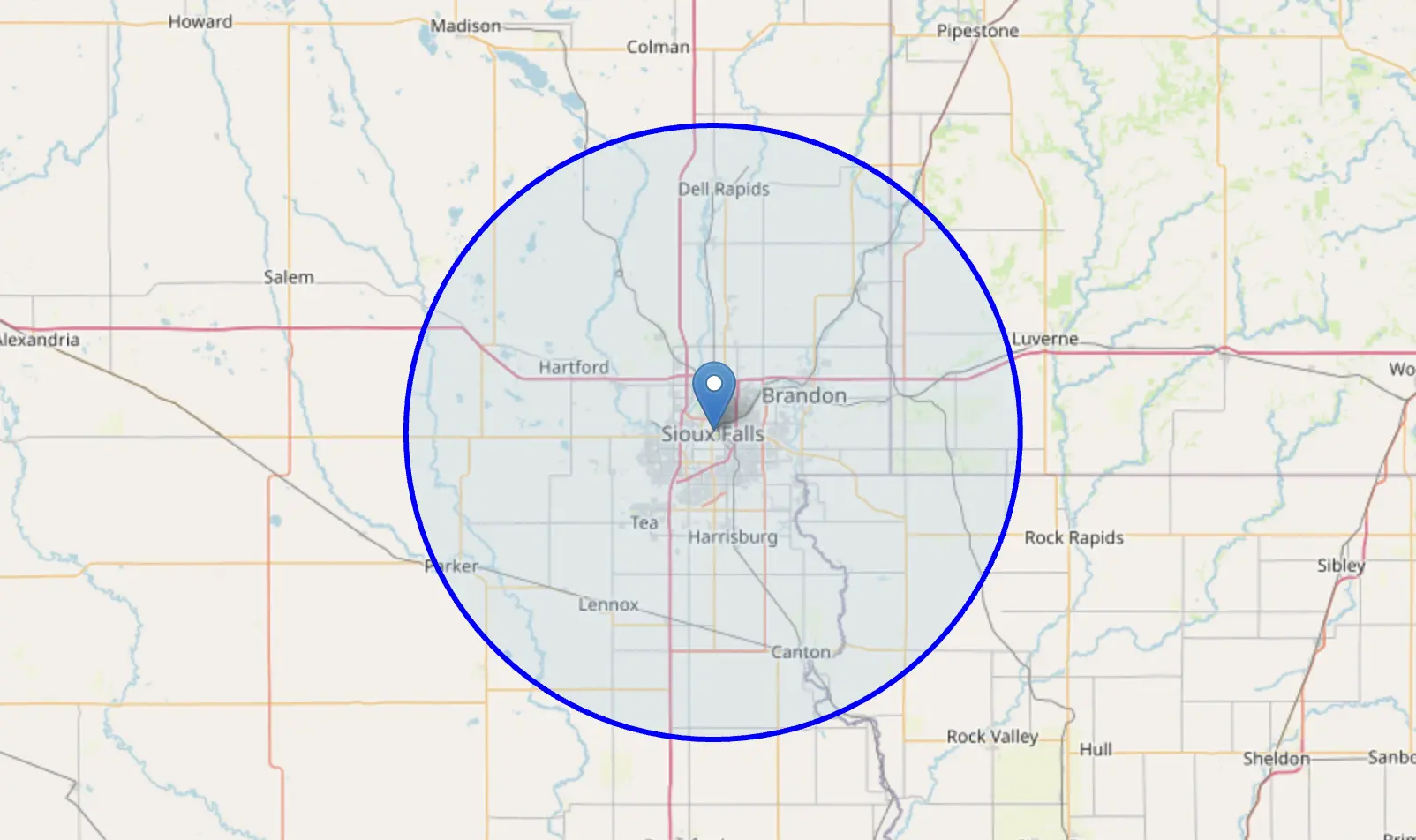
Find local details for each community on our service-area pages.
Frequently Asked Questions
We're on an acreage near Crooks with our own well — does that change the radon question?
It adds a second, smaller question. Air testing comes first for every home, but a private well can carry dissolved radon into the house when water runs, so well households sometimes test both. City-water homes in town can skip the water side entirely.
Are there radon numbers published for Crooks itself?
No. The data grain stops at the county (Minnehaha County is EPA Zone 1, the highest-potential category), and a town of this size won't get its own dataset. The number that matters is the one from your basement.
Is Crooks a normal scheduling trip?
Yes. Crooks is about fifteen minutes northwest of Sioux Falls via Highway 115 and County Road 130. In-town Crooks and the surrounding acreages both book as routine visits.